

Health Library
Familial dysbetalipoproteinemia
Type III hyperlipoproteinemia; Deficient or defective apolipoprotein E
Familial dysbetalipoproteinemia is a disorder passed down through families. It causes high amounts of cholesterol and triglycerides in the blood.
Images
I Would Like to Learn About:
Causes
A genetic variant causes this condition. The variant results in the buildup of large lipoprotein particles that contain both cholesterol and a type of fat called triglycerides. The disease is linked to variants in the gene for apolipoprotein E.
Hypothyroidism, obesity, or diabetes can make the condition worse. Risk factors for familial dysbetalipoproteinemia include a family history of the disorder or coronary artery disease.
Symptoms
Symptoms may not be seen until age 20 or older.
Yellow deposits of fatty material in the skin called xanthomas may appear on the eyelids, palms of the hands, soles of the feet, or on the tendons of the ankles, knees and elbows.
Other symptoms may include:
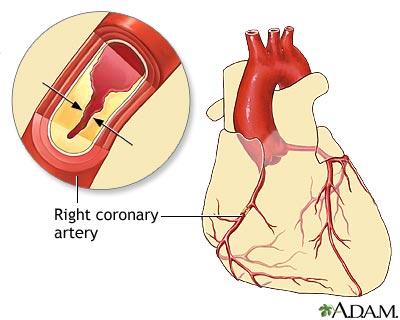
- Chest pain (angina) or other signs of coronary artery disease may be present at a young age
- Cramping of one or both calves when walking
- Sores on the toes that do not heal
- Stroke-like symptoms such as sudden trouble speaking, drooping on one side of the face, weakness of an arm or leg, and loss of balance
Exams and Tests
Tests that may be done to diagnose this condition include:
- Genetic testing for apolipoprotein E (apoE)
- Lipid panel blood test
- Triglyceride level
- Very low density lipoprotein (VLDL) test
Treatment
The goal of treatment is to control conditions such as obesity, hypothyroidism, and diabetes.
Making diet changes to reduce calories, saturated fats, and cholesterol may help lower blood cholesterol.
If cholesterol and triglyceride levels are still high after you have made diet changes, your health care provider may have you take medicines as well. Medicines to lower blood triglyceride and cholesterol levels include:
- Bile acid-sequestering resins.
- Fibrates (gemfibrozil, fenofibrate).
- Nicotinic acid.
- Statins.
- PCSK9 inhibitors, such as alirocumab (Praluent) and evolocumab (Repatha). These represent a newer class of medicines to treat cholesterol.
Outlook (Prognosis)
People with this condition have a significantly increased risk for coronary artery disease and peripheral vascular disease.
With treatment, most people are able to greatly reduce their levels of cholesterol and triglycerides.
Possible Complications
Complications may include:
- Heart attack
- Stroke
- Peripheral vascular disease
- Intermittent claudication
- Gangrene of the lower extremities
When to Contact a Medical Professional
Contact your provider if you have been diagnosed with this disorder and:
- New symptoms develop.
- Symptoms do not improve with treatment.
- Symptoms get worse.
Prevention
Screening the family members of people with this condition may lead to early detection and treatment.
Getting treated early and limiting other risk factors such as smoking can help prevent early heart attacks, strokes, and blocked blood vessels.
Related Information
AtherosclerosisStable angina
Peripheral artery disease - legs
Hypothyroidism
Overweight
Diabetes
Heart attack
References
Bredefeld CL, Lau R, Hussain MM. Lipids and dyslipoproteinemia. In: McPherson RA, Pincus MR, eds. Henry's Clinical Diagnosis and Management by Laboratory Methods. 24th ed. St Louis, MO: Elsevier; 2022:chap 18.
Mora S, Martin SS. Measurement of low-density lipoprotein cholesterol, non-high-density lipoprotein cholesterol, apolipoprotein B, and low-density lipoprotein particle concentration. In: Ballantyne CM, ed. Clinical Lipidology: A Companion to Braunwald's Heart Disease. 3rd ed. Philadelphia, PA: Elsevier; 2024:chap 3.
Robinson JG. Disorders of lipid metabolism. In: Goldman L, Cooney KA, eds. Goldman-Cecil Medicine. 27th ed. Philadelphia, PA: Elsevier; 2024:chap 190.
Tokgözoglu L, Libby P. Lipoprotein disorders and cardiovascular disease. In: Bonow RO, Mann DL, Tomaselli GF, et al, eds. Braunwald's Heart Disease: A Textbook of Cardiovascular Medicine. 13th ed. Philadelphia, PA: Elsevier; 2026:chap 25.
Writing Committee Members; Blumenthal RS, Morris PB, et al. 2026 ACC/AHA/AACVPR/ABC/ACPM/ADA/AGS/APhA/ASPC/NLA/PCNA Guideline on the management of dyslipidemia: a report of the American College of Cardiology/American Heart Association Joint Committee on Clinical Practice Guidelines. Circulation. 2026;153(17):e1154-e1276. PMID: 41824552 pubmed.ncbi.nlm.nih.gov/41824552/.
BACK TO TOPReview Date: 4/28/2026
Reviewed By: Michael A. Chen, MD, PhD, Associate Professor of Medicine, Division of Cardiology, Harborview Medical Center, University of Washington Medical School, Seattle, WA. Also reviewed by David C. Dugdale, MD, Medical Director, Brenda Conaway, Editorial Director, and the A.D.A.M. Editorial team.
 | A.D.A.M., Inc. is accredited by URAC, for Health Content Provider (www.urac.org). URAC's accreditation program is an independent audit to verify that A.D.A.M. follows rigorous standards of quality and accountability. A.D.A.M. is among the first to achieve this important distinction for online health information and services. Learn more about A.D.A.M.'s editorial policy, editorial process and privacy policy. A.D.A.M. is also a founding member of Hi-Ethics. This site complies with the HONcode standard for trustworthy health information: verify here. |
The information provided herein should not be used during any medical emergency or for the diagnosis or treatment of any medical condition. A licensed medical professional should be consulted for diagnosis and treatment of any and all medical conditions. Links to other sites are provided for information only -- they do not constitute endorsements of those other sites. No warranty of any kind, either expressed or implied, is made as to the accuracy, reliability, timeliness, or correctness of any translations made by a third-party service of the information provided herein into any other language.
© 1997-
2026 A.D.A.M., a business unit of Ebix, Inc. Any duplication or distribution of the information contained herein is strictly prohibited.
All content on this site including text, images, graphics, audio, video, data, metadata, and compilations is protected by copyright and other intellectual property laws. You may view the content for personal, noncommercial use. Any other use requires prior written consent from Ebix. You may not copy, reproduce, distribute, transmit, display, publish, reverse-engineer, adapt, modify, store beyond ordinary browser caching, index, mine, scrape, or create derivative works from this content. You may not use automated tools to access or extract content, including to create embeddings, vectors, datasets, or indexes for retrieval systems. Use of any content for training, fine-tuning, calibrating, testing, evaluating, or improving AI systems of any kind is prohibited without express written consent. This includes large language models, machine learning models, neural networks, generative systems, retrieval-augmented systems, and any software that ingests content to produce outputs. Any unauthorized use of the content including AI-related use is a violation of our rights and may result in legal action, damages, and statutory penalties to the fullest extent permitted by law. Ebix reserves the right to enforce its rights through legal, technological, and contractual measures.
